Murder and the Missions (continued)
By Debra Staab
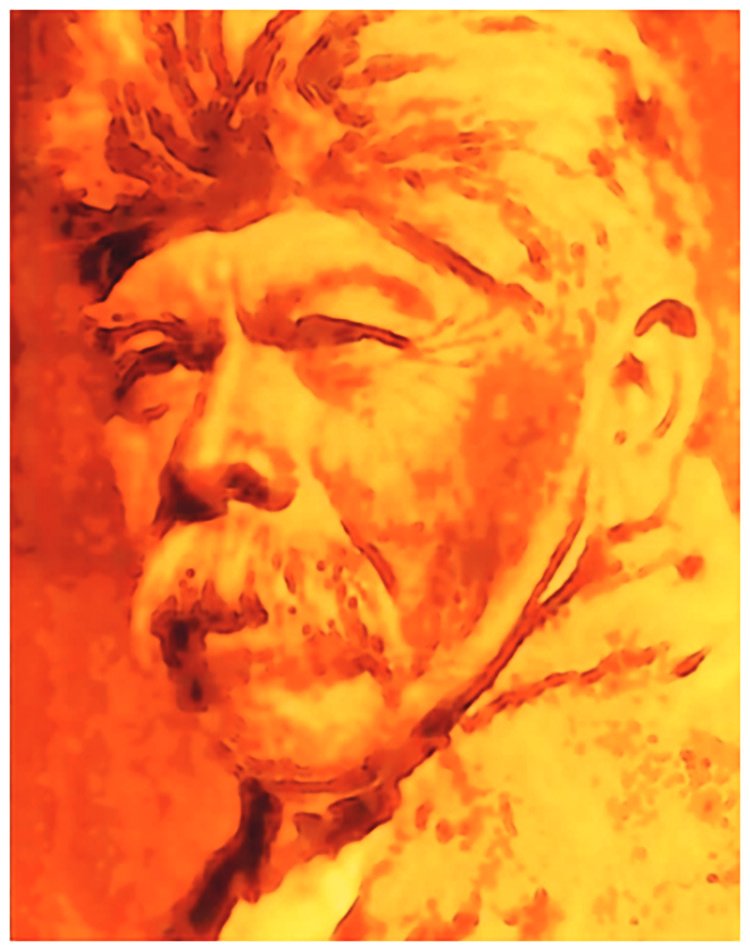
originally from the Central Valley and a leader of the Indigenous people at Mission Santa Clara, finally had enough.
Around 1831, Yozcolo, also called the “bandit Indian,” led a massive revolt with a few hundred Native Americans who raided mission Santa Clara, freed captive women, and drove away thousands of horses and cattle. He escaped and soon built a settlement in the Lexington hills, where his group continued to raid local ranches.
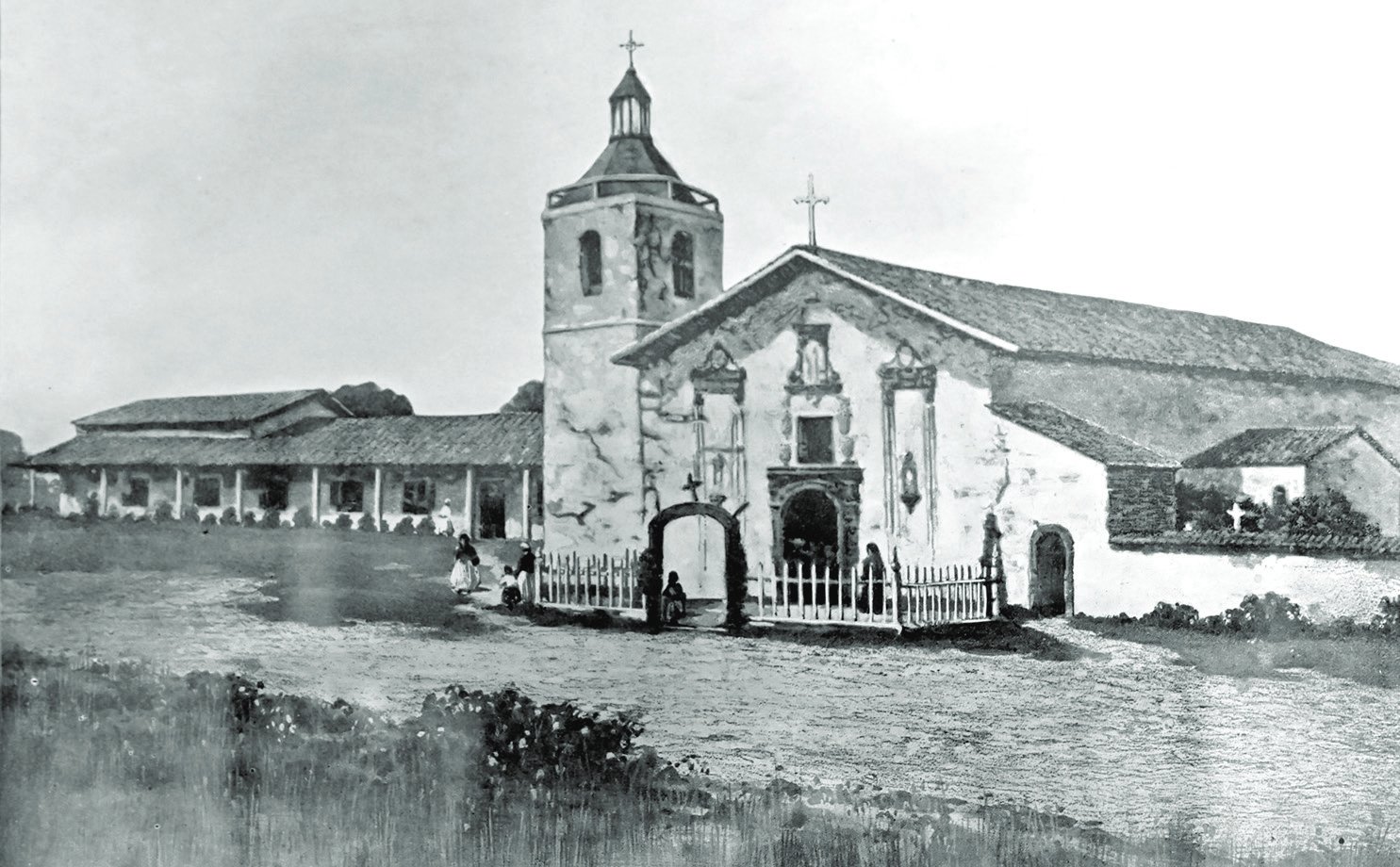
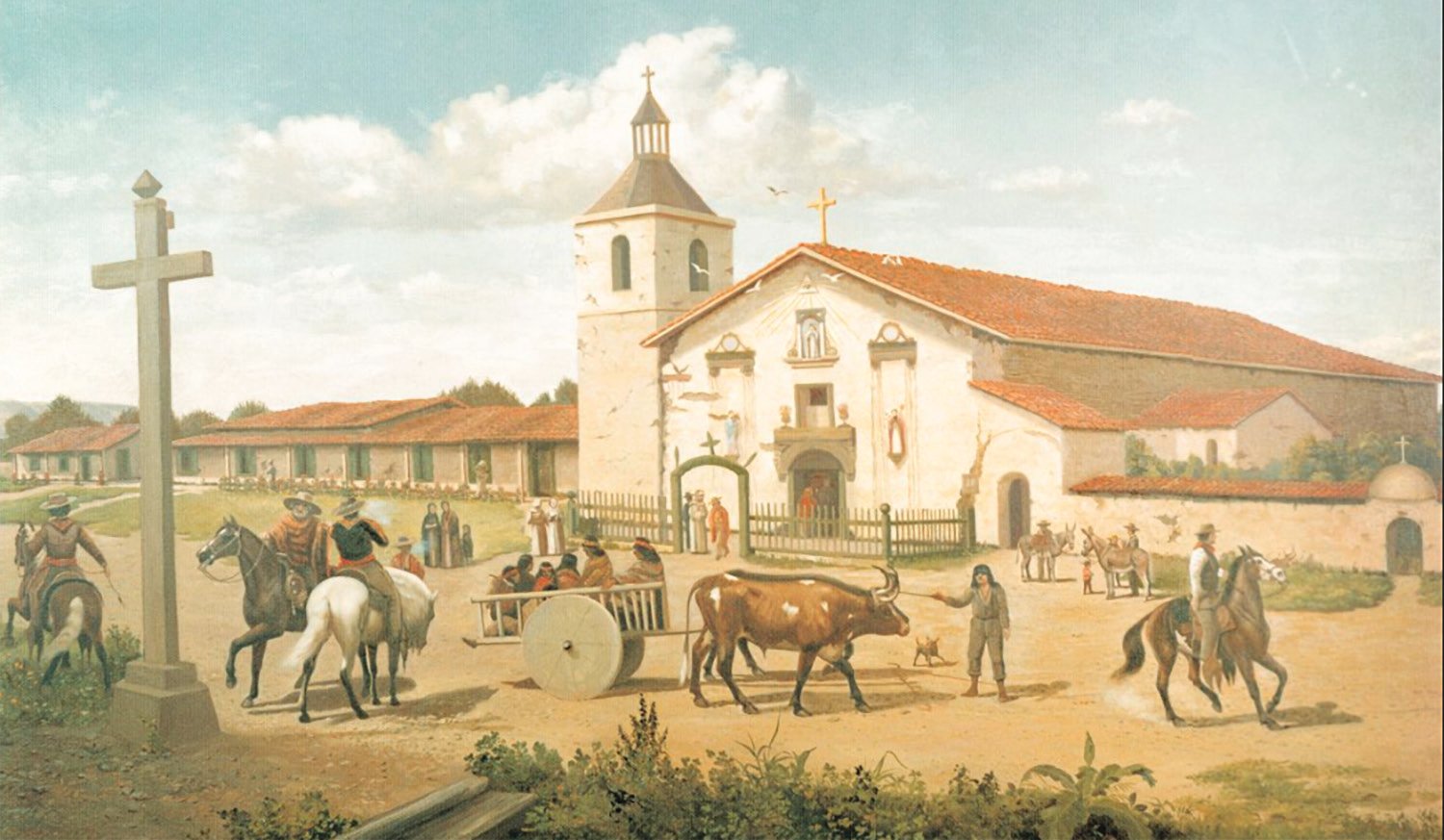
The 21 mission sites were closed in groups. The first 10 closed in 1834, including San Diego and San Francisco. The second phase of six took place in 1835, including Mission Santa Clara. The last five shut down in 1836, including Mission Santa Cruz. It was one of the last to close. The distribution of mission land and resources was managed by largely unsupervised government administrators. Although it was against the law, they sold most of the properties to wealthy Mexican families. Only a handful of mission inhabitants received land grants. Most either fled to the Central Valley or took work at local ranches. A few villages of “free Indians” existed, including Yozcolo’s group.
When Yozcolo’s band killed a local rancher in 1839, the Mexican Army came after them at Lexington. The result was a fierce battle that lasted all day, called The Battle of Los Gatos. Sadly, Yozcolo and all the people with him were killed. In true barbaric fashion, Yozcolo’s head was mounted on a pike, paraded around San Jose, and posted in front of the old mission church. It was a warning that murderers would pay the ultimate price. The Mexican soldier who led the attack was rewarded with a 4,000-acre land grant called Rancho San Antonio, near today’s park of the same name in Los Altos. Life After the Missions. By the 1840s, Americans started to arrive in California via overland trails. In 1846, the United States declared war on Mexico, believing that it was Manifest Destiny to expand their territory. In 1848, the Treaty of Guadalupe Hidalgo was signed to end the war. As part of the agreement, the United States paid Mexico $15 million to buy California and all Mexican territory north of the Baja Peninsula. The treaty also guaranteed that the property rights of all existing grantees would remain intact. The Gold Rush started in 1849, and California became a state in 1850.
The California Land Act of 1851 required property holders to provide proof of ownership, which was a difficult task for many. Native Americans in California faced the most difficult challenges to reclaim. California state laws ignored the Treaty of Guadalupe Hidalgo and denied Indians citizenship, voting rights, and the right to testify in court. These laws allowed Native Americans to be used as indentured servants.
Numerous attempts to eliminate Native land claims, erase Indigenous culture, and force Indigenous people to assimilate into American life continued. Centuries after Native Americans were displaced, reparations for their mistreatment are finally being discussed. Progress has been slow, but by 2026, over 103,000 acres of California indigenous lands have been turned over to tribal stewardship. Governor Newsom summarized the intention of the reparation plan saying, “These awards are an acknowledgment of past sins, a promise of accountability, and a commitment to a better future for the land and all its, especially its original stewards. Only through partnership with California Native American tribes can we address the climate and biodiversity crisis and build a healthier California.