What’s in a Name?
By Debra Staab · June 2026 · Volume MMXXVI, Number 6 · Page 20 · 7 min read
Let’s have a bit of fun reviewing the backstories and origins of some local place names. Here is some background: Beehive. The Beehive refers to a hill between Mountain Charlie Gulch and Hutchinson Road, located at Summit West.
The mountain has an elevation of 2,109 feet and is named due to its shape resembling a bee’s hive. Eccles. Eccles was a railroad stop about 2.5 miles north of Felton along Zayante Creek. The name is from John Sanderson Eccles, a gasfitter from Ireland, who deeded the right of way to the South Pacific Coast Railroad in 1878. A 310-foot-long spur ran from the stop to the Union Mill on Lompico Creek. A post office, general store, hostelry, and passenger shelter were constructed at the site.
After the 1906 earthquake, Union Mill shut down and its spur was abandoned. The rest of the line was upgraded to standard gauge. For a few years, the area served as an appealing resort location with several small villas and hotels.
The small area along the banks of Zayante Creek did not leave room for growth. In 1913, Eccles was demoted to a flag-stop and Olympia, just to the south, became the main stop for the region. In 1915, the Eccles post office moved to Olympia, and the hamlet of Eccles ceased to exist. The stop was formally abandoned by the railroad in 1942.
Ice Cream Grade. Ice Cream Grade is the name of a 2.7-mile-long road that runs from Empire Grade at Felton Empire Road to Pine Flat Road in Bonny Doon. There are a few different theories about how this road was named. One story comes from an article in the Scotts Valley Banner written in 1982. The article describes how Santa Cruz County used prisoners to do road work, even on very hot days. Apparently, watching the men work under the blazing sun raised sympathy from the local women. To offer comfort, the women served the workers homemade ice cream.
Another story is based on a piece in the Santa Cruz Surf published in 1895. The residents of Bonny Doon wanted the county to improve the route to Felton on what was then called Adams Road. However, Santa Cruz County refused to take on the project, instead suggesting that the community could improve the road themselves. The county further offered to take over the road if it was upgraded sufficiently.
The neighbors banded together and fixed the road through their own hard work and numerous fundraisers, including many ice cream socials. They saved the road, and a quote from the article sums up the effort: “The new ‘cut-off’ road on Ben Lomond from Bonny Doon to Empire Grade is called by the people on the mountain the ‘Ice Cream Grade’ because of the many ice cream suppers given in aid of the fund for building the grade.”
A third theory comes from a story in the Frontier Gazette in 1959. The story simply states that when Bonny Doon residents met to discuss road building, the men agreed to bring the cake if the women brought the ice cream. The meeting was successful and the road was built. The name Ice Cream Grade was used to honor the local collaboration.
Littlejohn Bridge. When people hear the name Little John, they may think of Robin Hood’s companion or the modern day rap star of the same name. However, Littlejohn Bridge and Littlejohn Gulch were named after local Santa Cruz pioneer Jose David Littlejohn.
Littlejohn was born locally in 1832 and married Helena Lodge, the daughter of Martina Castro, in 1851. The couple was given 3,000 acres of Castro’s land near where the bridge was later built. Littlejohn’s father was a Scottish carpenter who arrived in Monterey in 1824. He was granted Rancho los Carneros in 1834.
Littlejohn Bridge crosses Soquel Creek at Olive Springs Road about five miles north of Soquel, just off San Jose-Soquel Road. The bridge was upgraded from a one-lane wooden structure to a two-lane concrete bridge in 1973.
Olive Springs. Olive Springs was a popular destination resort located near the confluence of Soquel and Hinckley creeks. It was named after owner George Olive. Olive had made some money in the gold fields before he went into the lumber business in the Santa Cruz Mountains.
While developing his sawmill, Olive discovered mineral springs on his property that contained sulphur, iron, and soda. This discovery led him to pivot his business from logging to leisure in the form of a health resort. In 1895, Olive built a few summer cottages and brought people to his resort for picnics and camping. An 1897 article in the Santa Cruz Surf praised the resort, saying “Nowhere in the Santa Cruz Mountains can one get nearer to nature’s heart than in this sequestered canyon, and hundreds are already willing to testify to the medicinal value of the waters.”
In 1900, the Loma Prieta Lumber Company graded a road through Olive Springs Resort to their mill site in Hinckley Gulch, a move that Olive tried but failed to prevent due to access rights granted in the Soquel Augmentation. Although the lumber mill disrupted the peacefulness of the resort, the new road was welcome. A subdivision developed near the resort and Olive Springs School opened in 1903. The school closed in 1911.
In 1906, a major storm hit the area. Almost 23 inches of rain fell in just eight days. The deluge took out the mill site, the bridge over Soquel Creek, the road through the resort, and five of the nine cottages. Olive also lost much of the campground when it washed away into the creek. Both the mill and campground were rebuilt over the next several years.
George Olive died in 1912, and his son
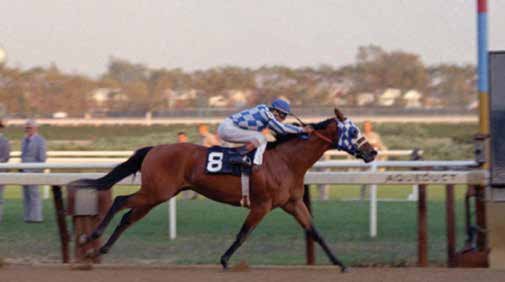
James took over the resort for several more years. Today, the springs are still there, but Riva Ridge, a neighborhood located in Summit West, may have been named after Vail Mountain’s longest ski run, known as Riva Ridge. The four-mile-long run offers a mix of intermediate and expert terrain from Another theory is that the community was named after the racehorse Riva Ridge, who had his own interesting story. Riva Ridge, a tall bay, was born in 1969 in Virginia at Meadow Stable, owned by Penny Chenery.
Records show that the name was given to honor Penny’s son-in-law, John Tweedy, who fought at Riva Ridge in the North Apennine mountains of Italy in WWII. The stables were struggling financially at the time. This smooth-running horse turned out to be their At two years old, Riva Ridge started winning races including the 1972 Kentucky Derby, the first such win for Meadow Stable in 24 years. Sadly, he came in fourth in the Preakness Stakes, the loss attributed to the rainy day and wet muddy track. Nonetheless, Riva Ridge came back strong and won the 1972 Belmont Stakes. He was a champion, and his successes put Meadow Stable back in Despite Riva Ridge’s notable wins which saved the stable, he was soon pushed into the shadows when his big red stablemate, Secretariat, took center stage a year later by winning the Triple Crown prize. Secretariat was so famous, they even made a movie about him. The truth is that without Riva Ridge, Chenery would have had to close down, and it’s very likely that Secretariat would never have had a chance to become famous. Riva Valencia Hall today and through history Valencia. A man named Nicolas Valencia left his mark on several local places. Valencia acquired land from Rafael Castro in 1855 which included a creek known as Arroyo de Novillos (creek of the young bulls). After Valencia took over the land, the name of the waterway was changed to Valencia Creek.
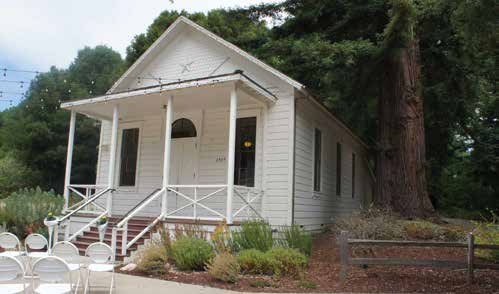
He was a native Californian who had been naturalized by the Treaty with Mexico. The former village of Valencia, located about two miles northeast of Aptos, grew around F. A. Hihn’s sawmill, which opened in 1886. The community had a school that operated from 1891 to 1931, and a post office that opened in 1893 and closed in 1909. The village of about 200 residents also included Valencia Hall, which was used as a social gathering space for the sawmill workers and their families.
Hihn’s descendants donated the hall to the Valencia Farm Center in 1933 after the mill shut down, and the valley was planted in apple trees. In 1975, the hall was given to the County of Santa Cruz for historical preservation. It is still in use today as an event venue at 2555 Valencia Road in Aptos.
Nearby Valencia Lagoon was plowed over during the construction of Highway 1 in 1948. In its place, a manmade pond was created. The Valencia Salamander Reserve was established in 1982. The preserve protects the long-toed salamander native to our area. The reserve is located near Rio Del Valencia Road was built over the old Hihn railroad lines that served the sawmill. It runs from Trout Gulch Road across Trout Creek and then travels in a northeasterly direction