
The Scott House
By Kathy McKinney · October 2026 · Volume MMXXVI, Number 10
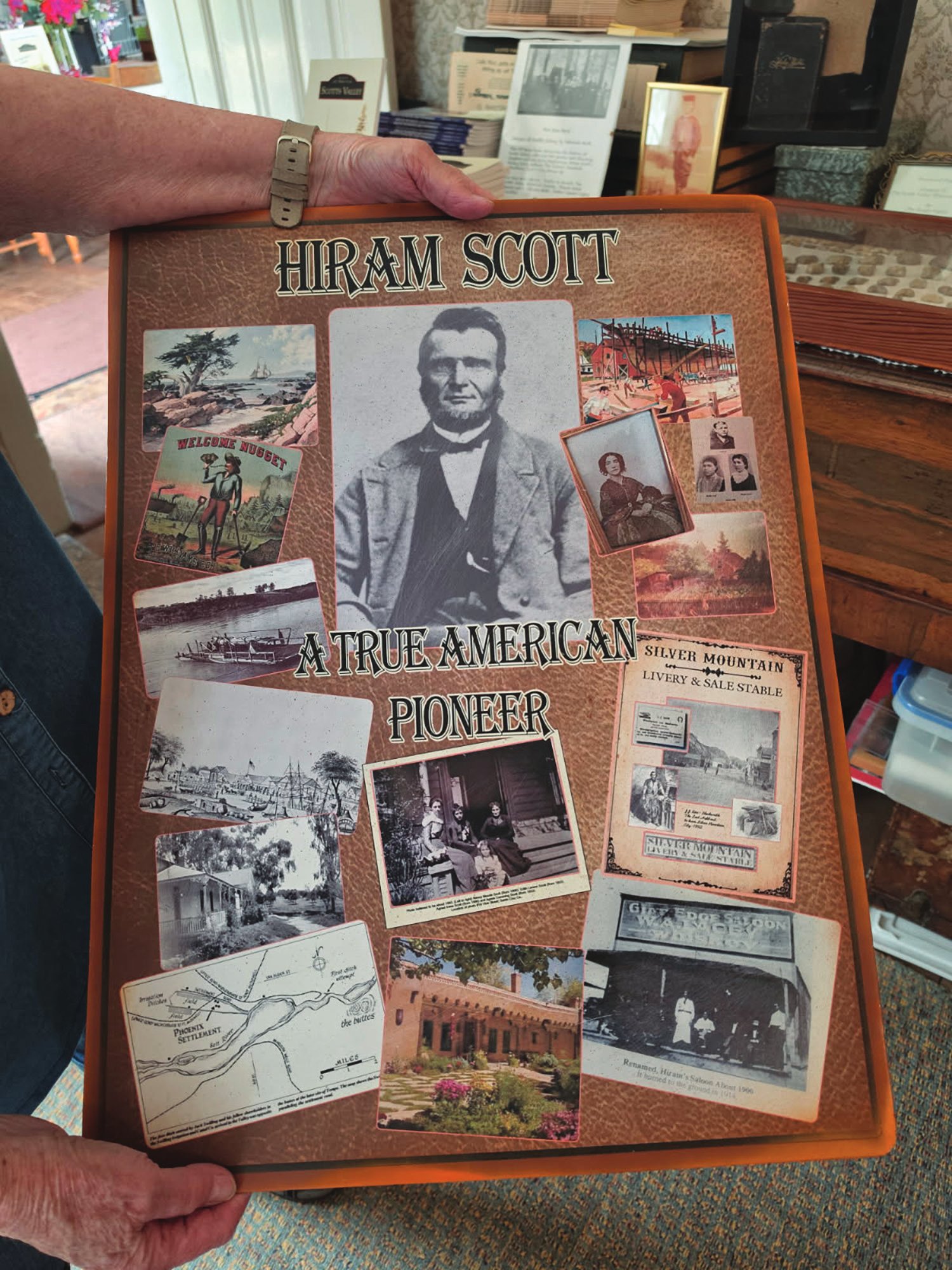
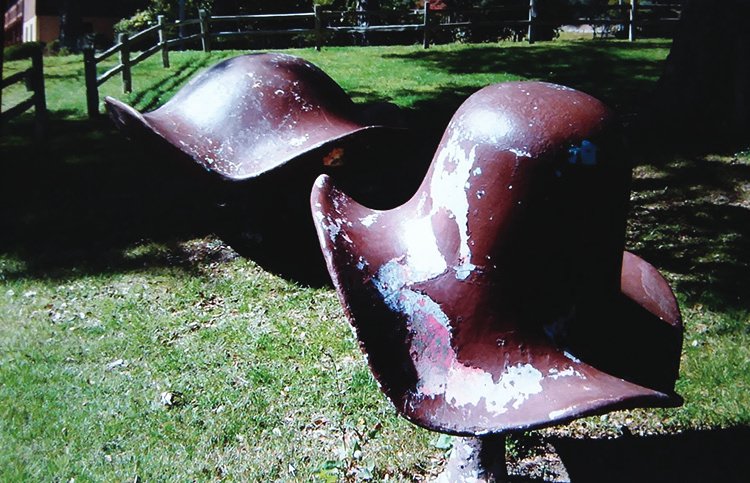
We stumbled upon this month’s adventure while on a quest to find the large mushroom sculptures that used to be part of Santa’s Village, a Christmas-themed amusement park in Scotts Valley that operated from the 1950s through 1979. We had read that a few of these whimsical play structures were located at MacDorsa Park in Scotts Valley. Alas, the mushrooms have been removed from the park, probably due to liability.
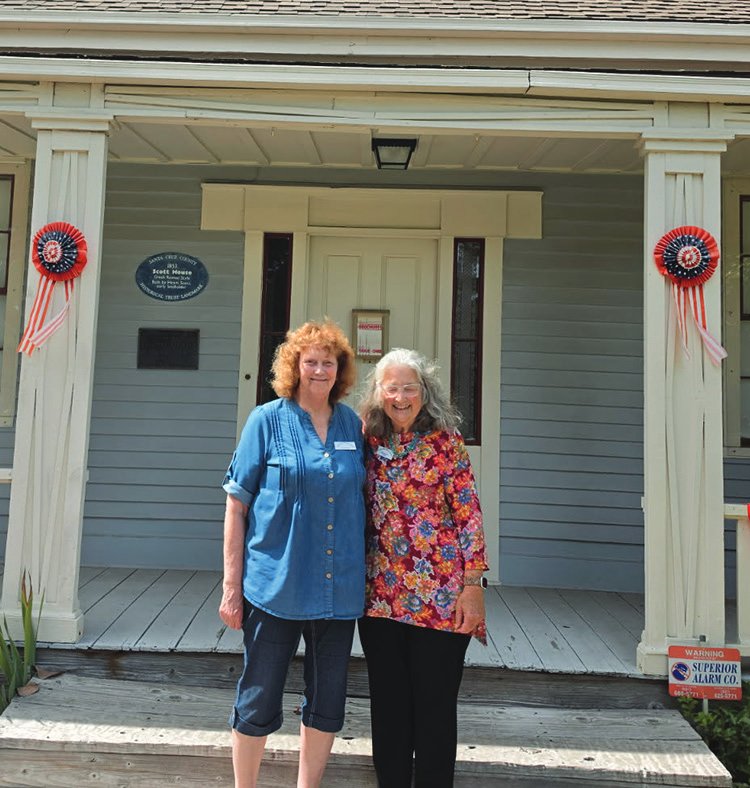
However, the park is also the site of the historic Scott House and the Scotts Valley Historical Society collection. While the Scott House doesn’t have enough volunteers to maintain regular hours of operation, there is a number posted to call for a tour.
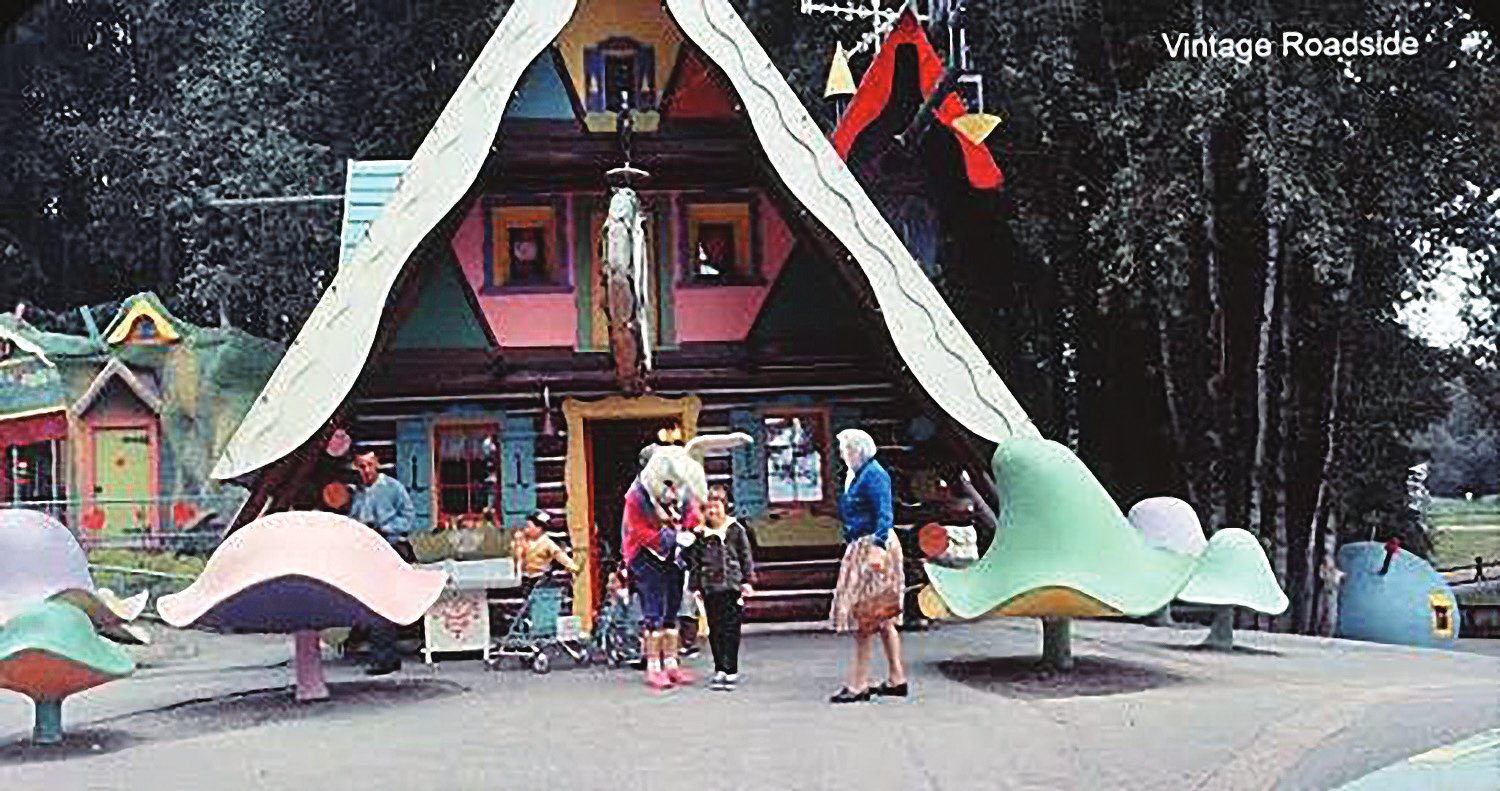
I called Debbie Muth, president of the Scotts Valley Historical Society and author of Santa Cruz Through Time and Scotts Valley (Images of America), and we arranged a time to meet. When I arrived, Debbie and volunteer Lane Maloney welcomed me into the house and gave me a detailed tour.
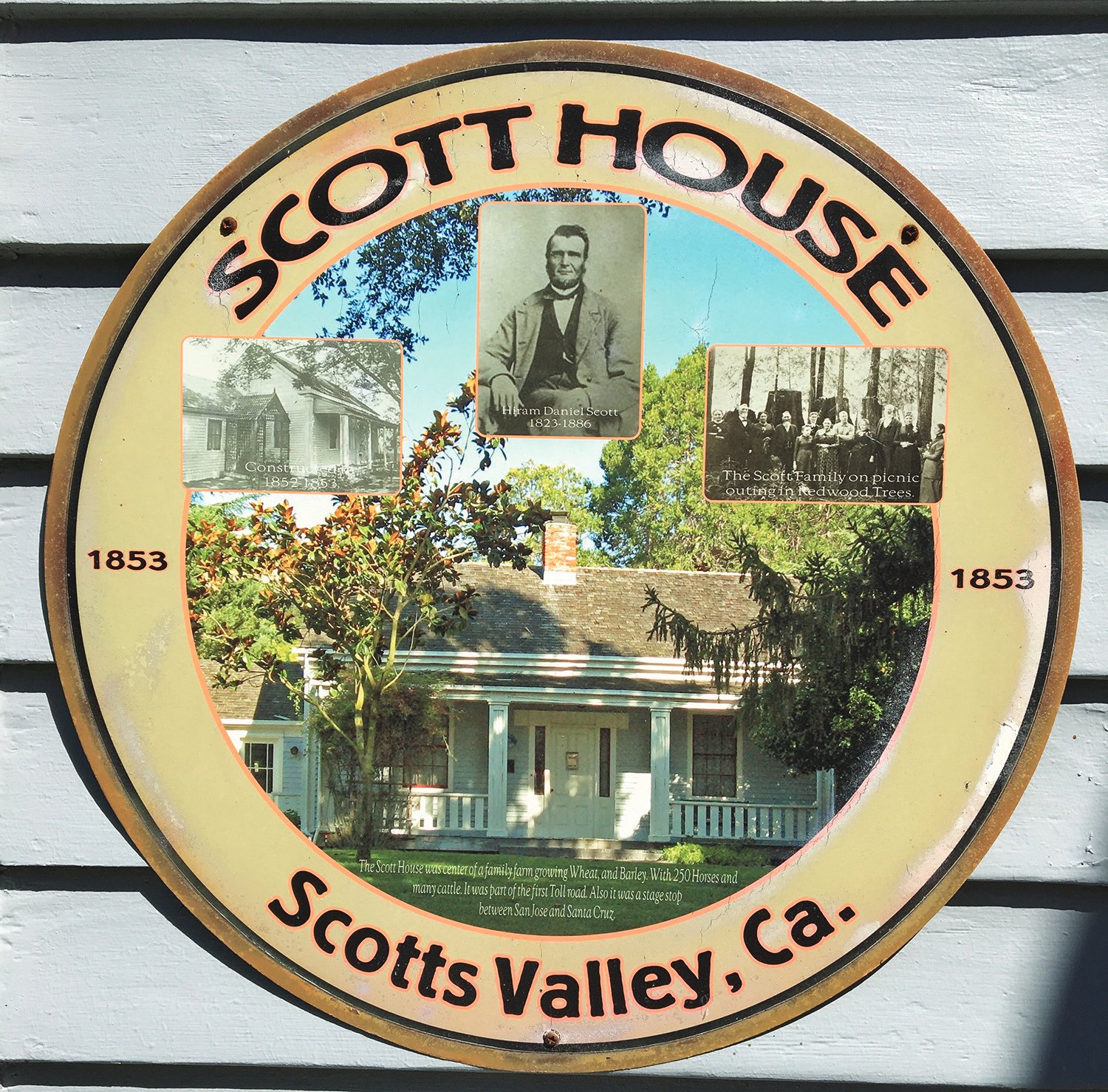
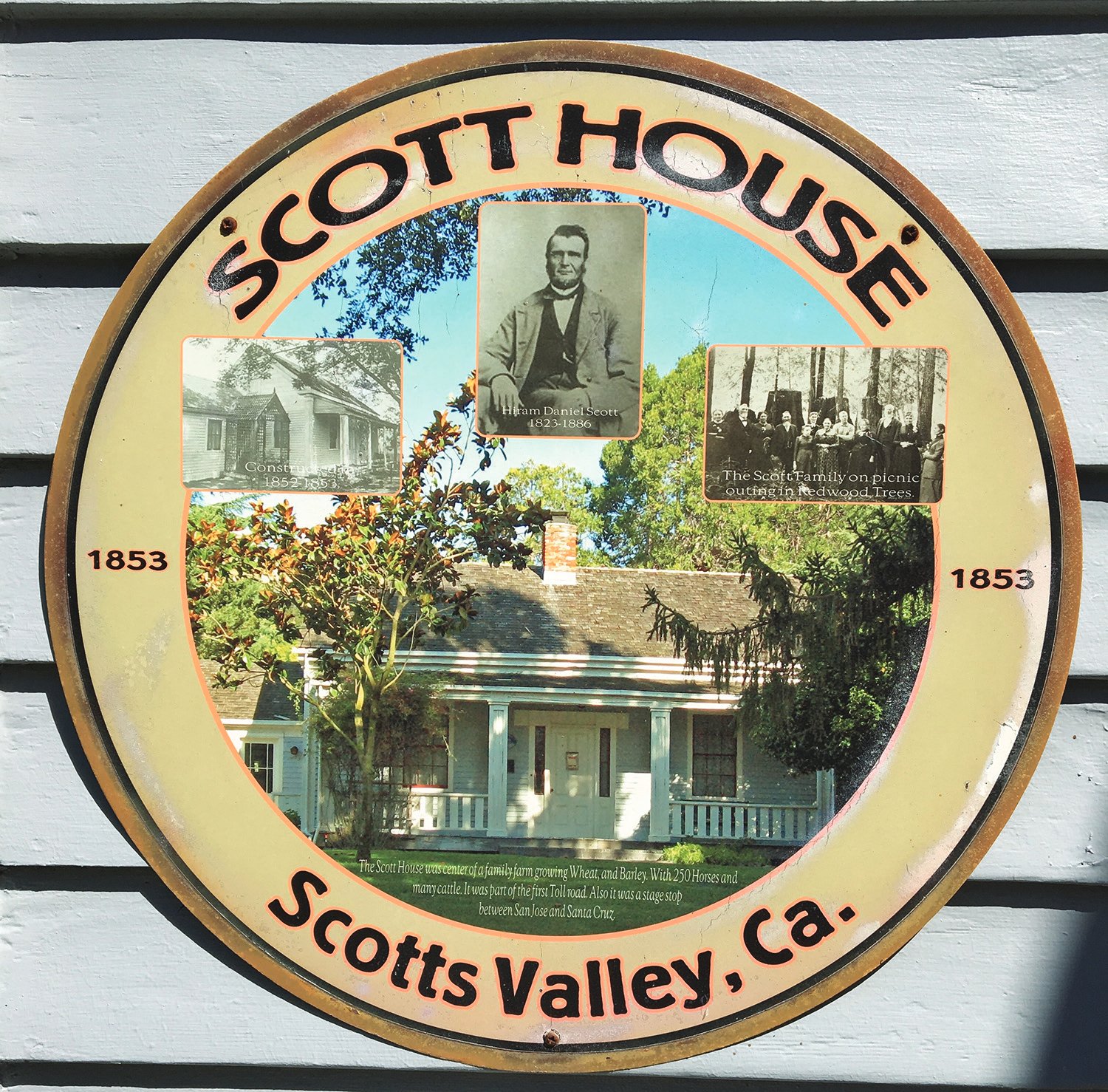
Hiram Daniel Scott built the Scott House in 1853. It is one of the oldest wood-framed structures in Santa Cruz County. Hiram’s family was in the shipbuilding business. In 1847, Hiram was training to become a sea captain on the American Bark Whiton, which had sailed from Maine and followed the Cape Horn route, around the southern tip of South America and up the West Coast. The trip was between 16,000 and 20,000 miles. Upon arriving in Monterey, California, he “jumped ship” and settled in Santa Cruz. When gold fever hit, Hiram headed to the Sierra Nevada mountains. He struck it rich.
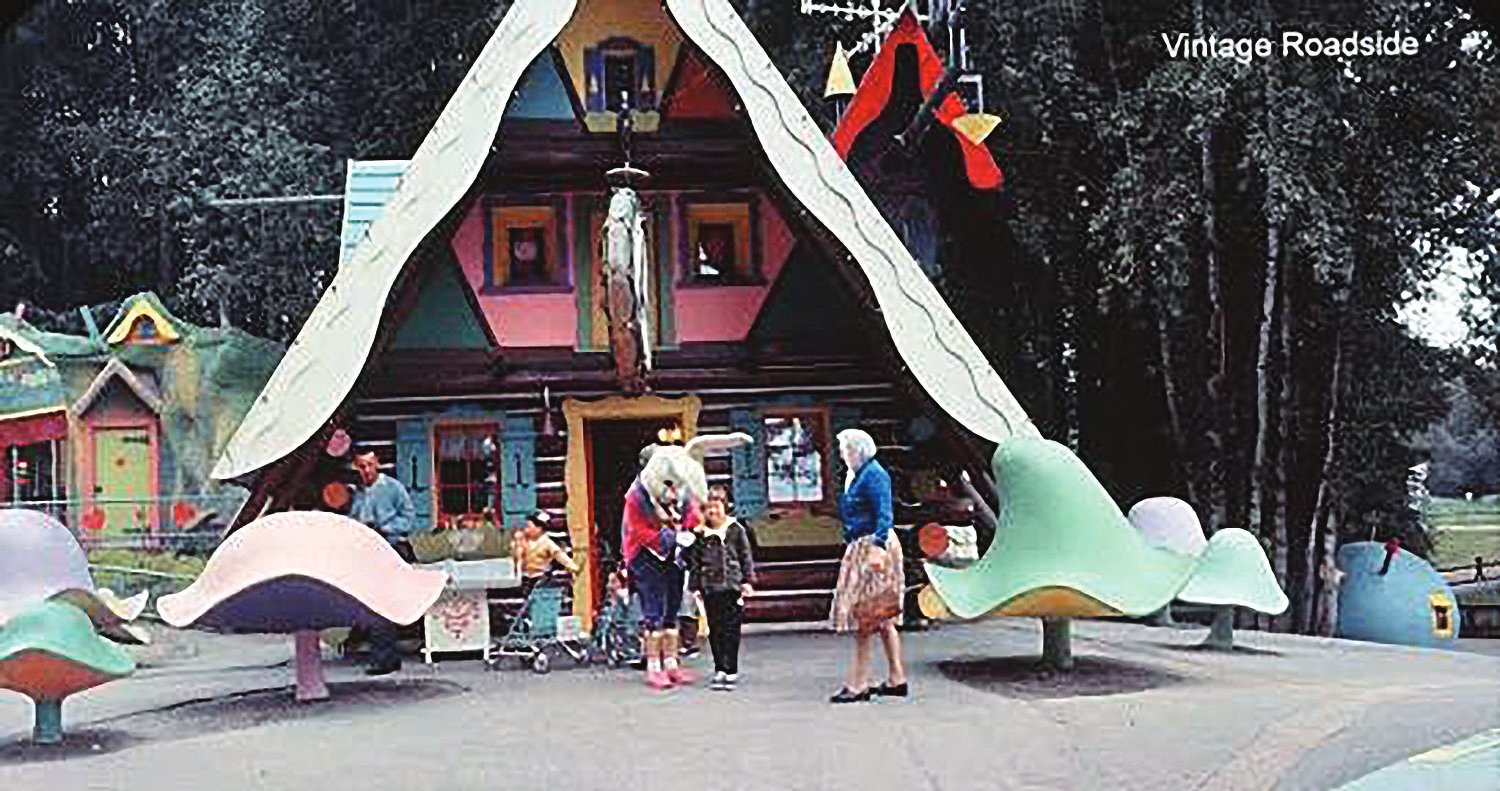
According to Myth, Hiram was always looking for the next big thing. After striking gold, Hiram and a couple of partners built and operated the first ferry site on the San Joaquin River at Mossdale Landing. They charged $1 per crossing to carry miners headed to the gold fields. They also built The Stockton Hotel, the first hotel in Stockton. Hiram sold his interest in the Stockton Hotel and returned to Santa Cruz. He purchased the 4,437-acre Rancho Saint Augustine, on September 9, 1850, the same day that California became a state. He paid $20,000 for the rancho, that encompassed (Continued on page 23)
much of present-day Scotts Valley Hiram constructed the house of locally milled redwood in the Greek revival style. Some of the redwood planks in the ceiling are impressively wide, obviously cut from ancient and very large trees. Hiram used mortise and tenon construction techniques, that had been used in shipbuilding by his family in Maine. The two-story home has a kitchen, dining room, parlor, two bedrooms, and a large unfinished attic area. It is adorned with antiques and period fixtures.
When the house was completed in 1853, Hiram’s family moved west to join him. Hiram married Anges Cummings in 1861, and the couple had three children. By the 1870s, Hiram decided to head east again to try his hand mining silver.
Anges decided to stay home, but one son joined him. Hiram eventually settled in the Phoenix, Arizona area, where he owned a saloon in Casa Grande. He died penniless on March 25, 1886, in Casa Grande, Arizona, at age 63. His grave has never been located.
According to Philip Trumbly, great-great grandson of Hiram Scott, “Family stories indicate he may have been buried under the saloon he “owned” at the time of his death in Casa Grande. Hiram was an adventurer and risk taker; sort of a rags to riches to rags story.....always searching for that next gold strike or business venture. He owned the saloon in Casa Grande on borrowed money and when he died he was more or less broke, so there was no money for his funeral or headstone."
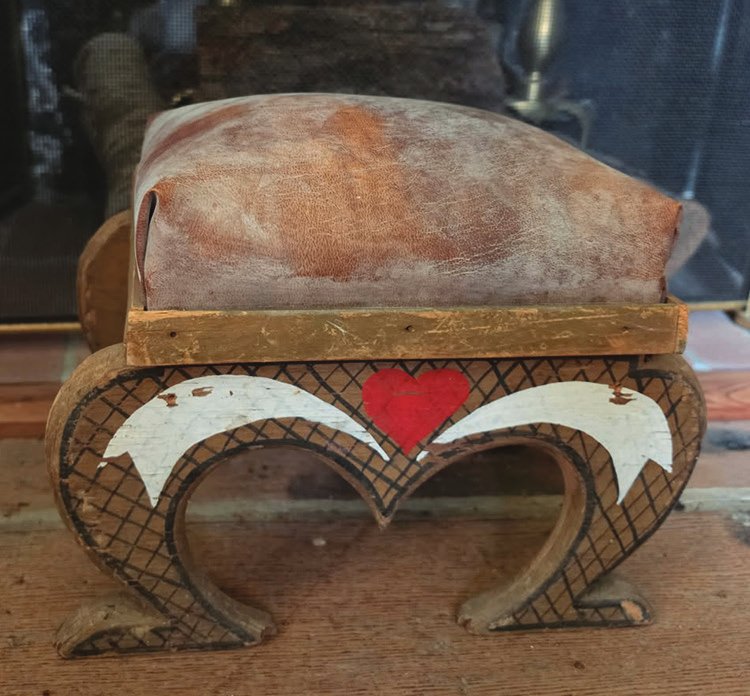
In addition to sharing the fascinating of Hiram Scott, Muth and Maloney also showed me many collectible items from both Santas Village and The Lost World, which was the other amusement park located in Scotts Valley that featured unique grafted trees and life-size dinosaur replicas.
There are many photos of the Scott family and the The Scott House originally stood at Scotts Valley Drive but was moved up the hill in 1936 to accommodate the construction of Highway 17. Many families have lived in the In 1977 the Scott House was restored, thanks to the collaborative efforts of Arch McDonald and Steve Dorsa who donated the old house and the land, the Scotts Valley Historical Society, the city of Scotts Valley, and other community groups. It was listed on the National Registrar of Historic Places.
You can tour the Scott House too! To arrange a tour for yourself or for a group, call Debbie Muth at 831-246-0710.
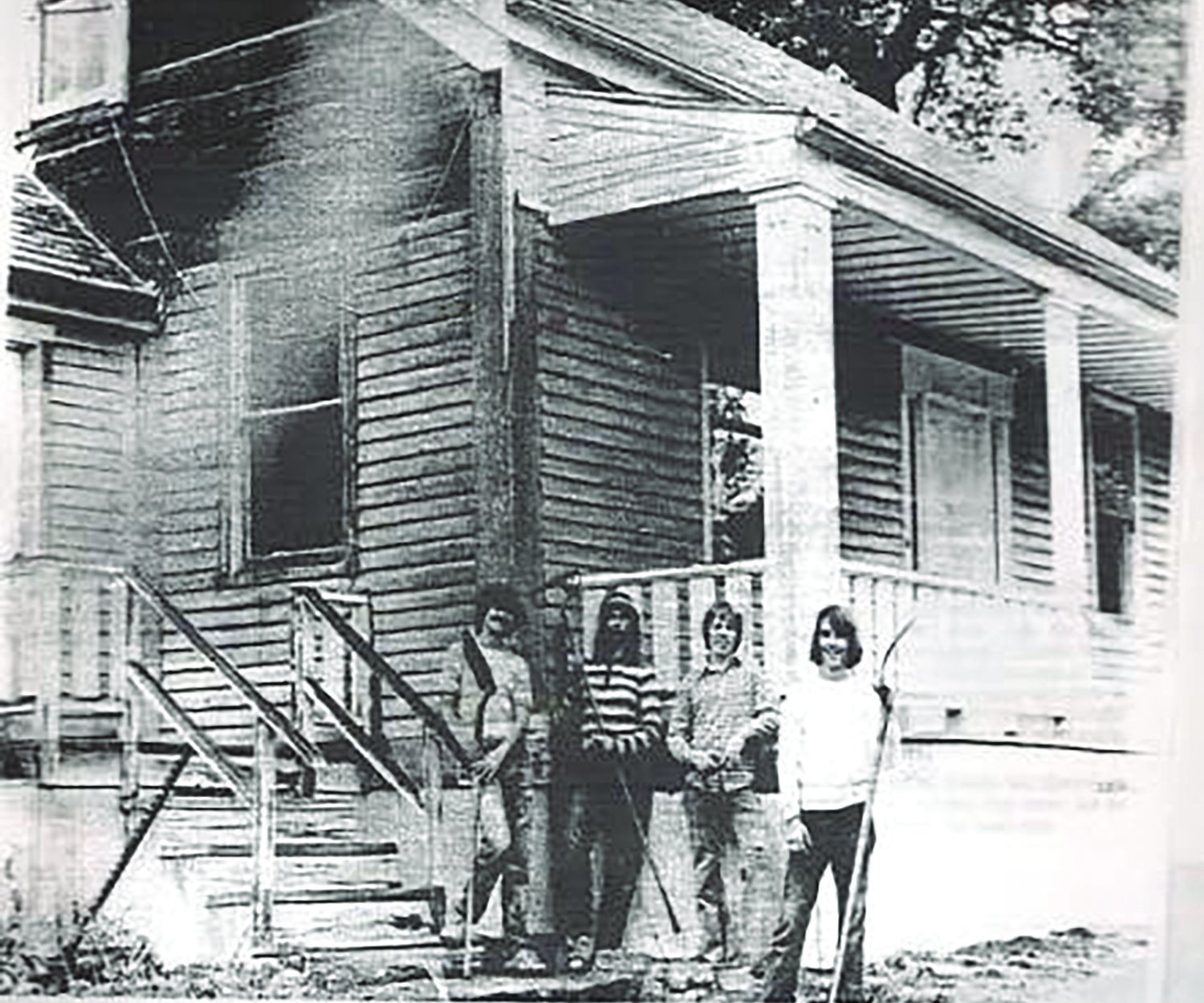
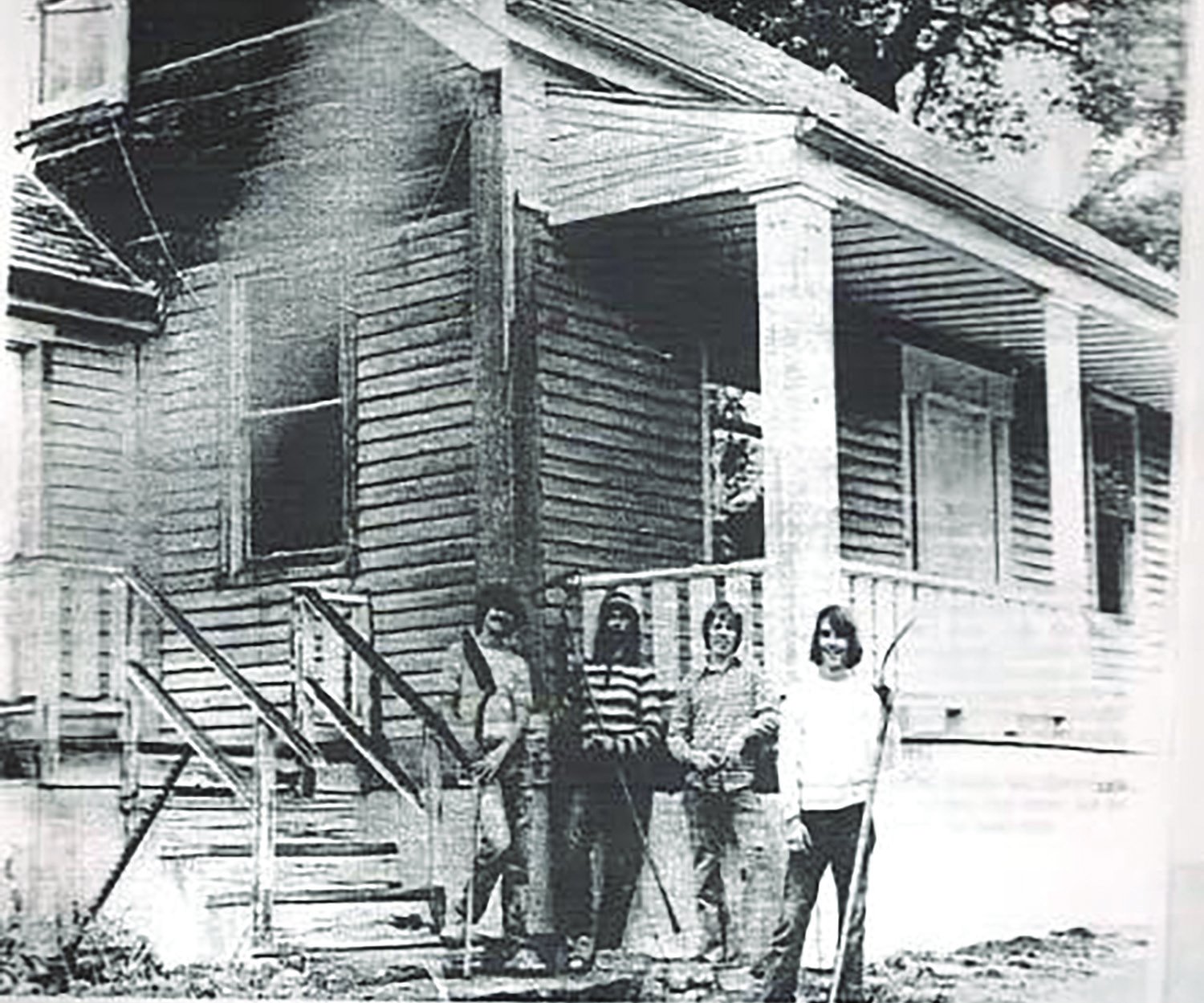
A 1976 restoration project by the Youth Employment Service removed asbestos shingles from the Scott House to expose the original clapboard siding. One member of the team was Wayne Thompson (far left), who taught science at C.T. English Middle School for many years. Wayne grew up at The Lost World, another amusement park located in Scotts Valley, that his family owned.
See it on printed page 22 of October 2026 · Volume MMXXVI, Number 10 →