Page 14
Hidden Gem in the Mountains
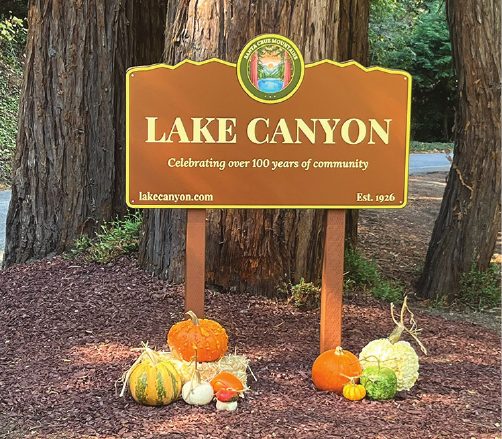
Nestled in the forest south of Los Gatos and west of Lexington Reservoir, the mountain community of Lake Canyon is defined by its dramatic topography. It features towering second-growth redwoods, steep Douglas fir slopes, and perennial mountain springs.
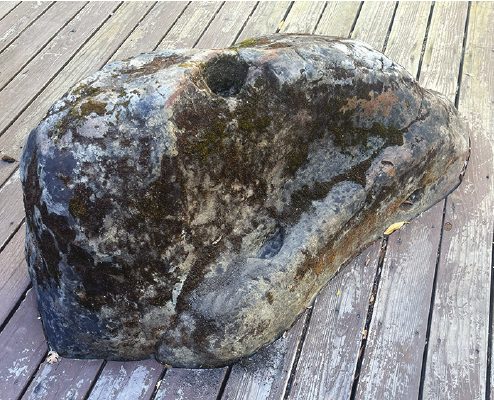
Long before the 1900’s, this canyon served as a rich ecological corridor and home for Indigenous people. The Ohlone people ground acorns into a fine meal or flour to serve as primary staples. Several rocks in the community still show indentations used for that purpose.
Lake Canyon is just west of Highway 17, between Black Road and Montevina Road, up the canyon that runs above the small sliver of Lexington Reservoir on your right as you drive toward Santa Cruz. Many visitors are surprised to find this beautiful and quiet community of 56 homes tucked into the forest, just a six-minute drive to downtown Los Gatos.
Beardsley Road is the main road in our Canyon. It runs along Lyndon Canyon Creek, and gets its name from the Beardsley family. They were prominent early settlers and landowners in Santa Clara County and the Santa Cruz Mountains during the late 19th and early 20th centuries.
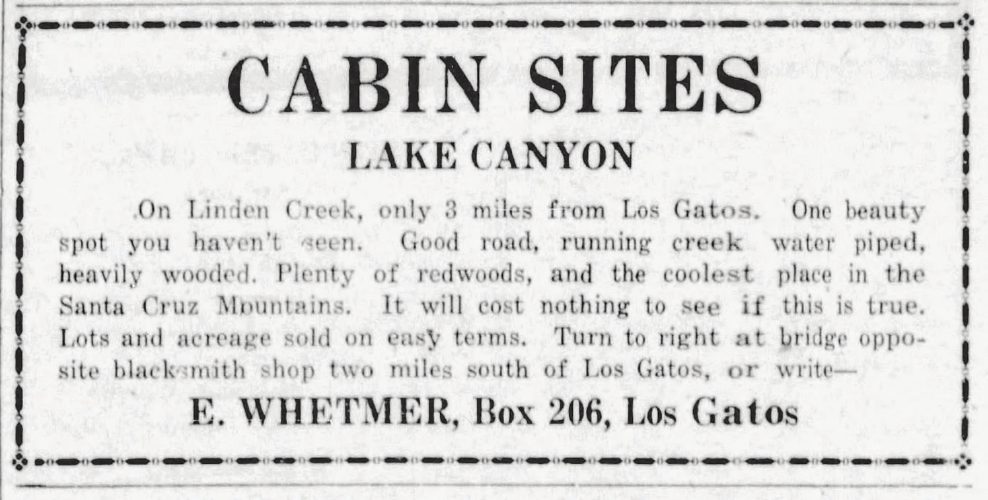
The Weekend Escape Boom. In the mid-1920s, improved automobile access and a yearning for fresh mountain air triggered a land rush. Families from San Jose and the broader Bay Area bought small parcels along the canyons to build rustic summer cabins, which were later transformed into permanent homes.
Self-reliance, volunteering, and resilience have been enduring qualities of Lake Canyon residents. We manage our roads, secure our own water, and look out for one another through storms, floods, landslides, earthquakes, droughts, and wildfires.
Self-Reliance. Before Lake Canyon was officially subdivided into a residential community on July 25, 1926, the canyon was part of larger mountain homesteads and logging territories. Lake Canyon had a weigh station and market for loggers to weigh their logs and stock up on supplies. There was a community room and movie house. Ranchers and homesteaders in the area carved out dirt wagon trails to haul timber and access the valley below. The primary route snaking through the canyon took the name of the Beardsley family homestead that it originally passed through. When the community was formalized in 1926, the historic name was retained and the road was paved to serve the canyon’s properties.
While the subdivision was officially mapped out in 1926 as a weekend escape, and as housing for loggers and miners, the permanent growth of the neighborhood required disciplined infrastructure management.
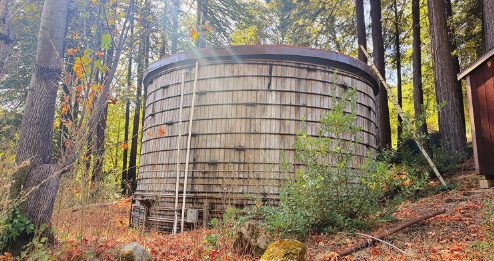
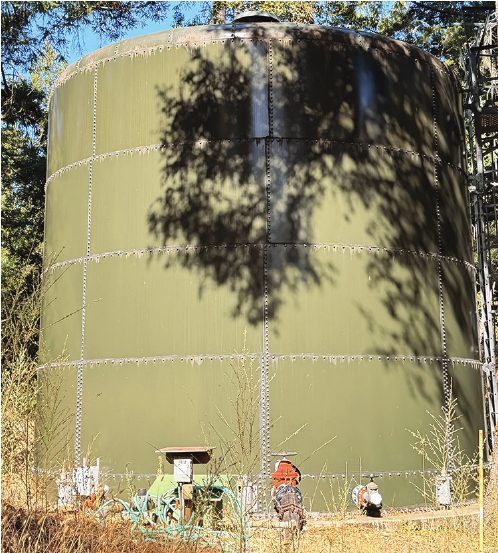
In 1938, property owners formally incorporated the Lake Canyon Mutual Water Company. As a private, nonprofit mutual water company, the members established the company to capture, treat, and distribute clean drinking water across the steep terrain of the canyon while maintaining the private mountain roads we depend on every day.
Running a water system in the Santa Cruz Mountains is no small feat. Over the decades, generations of board members, treasurers, and operations managers have balanced state compliance, seasonal weather shifts, watershed protection, and system upgrades. From early gravity-fed spring boxes to modern treatment operations, the water company has weathered droughts, storms, and regulatory evolutions without losing its grassroots spirit.
For about nine months of the year, our water comes from a mountain spring, providing high-quality water that requires minimal filtration. During the dry fall months, our supplementary source is Lyndon
Continued on page 15.