Native American Heritage Month
By Debra Staab · November 2026 · Volume MMXXVI, Number 11
November brings one of America’s biggest holidays, Thanksgiving. The “First Thanksgiving” took place in Plymouth, Massachusetts in 1621, when the Pilgrims shared their first successful corn harvest with local Native Americans. They celebrated with food and games during a three-day festival. At the federal level, President Lincoln proclaimed a national day of Thanksgiving in 1863. In 1941, President Franklin D. Roosevelt officially set the fourth Thursday of November as an annual holiday called Thanksgiving.
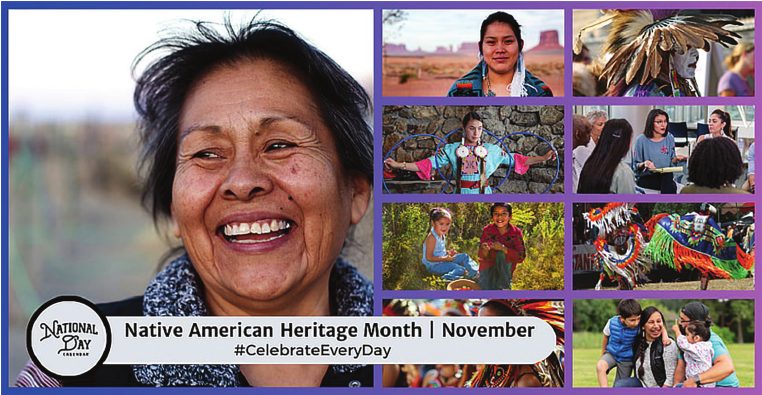
As early as 1914, Red Fox James from the Blackfoot Tribe petitioned for a day to honor Native Americans. The first “Indian Day” was celebrated in New York State in 1916. Much later, in 1976, President Gerald Ford declared Native American Awareness week. In 1990, President H.W. Bush signed a resolution making November National American Indian Heritage Month, now called National Native American Heritage Month.
The month-long celebration honors the cultural traditions, languages, stories, and prominent figures of the Indigenous community. The diversity of our Indigenous people, including the local Ohlone, Amah Mutsun, and Yokut tribes, offers a rich history of the thousands of Native Americans who inhabited our area. Currently, there are about 4.5 million Native Americans in the United States. They make up about 1.5 percent of the total population.
National Native American Heritage Month is a good time to reflect on past and present Indigenous communities in our area. You could read up on Native history through books such as We Are Not Animals by Martin Rizzo-Martinez or watch a movie like Bury my Heart at Wounded Knee or Winter in the Blood. Native American history is American history, and there is much to be learned from our shared story as well as contemplating new ways to live and work together in the future.
See it on printed page 12 of November 2026 · Volume MMXXVI, Number 11 →